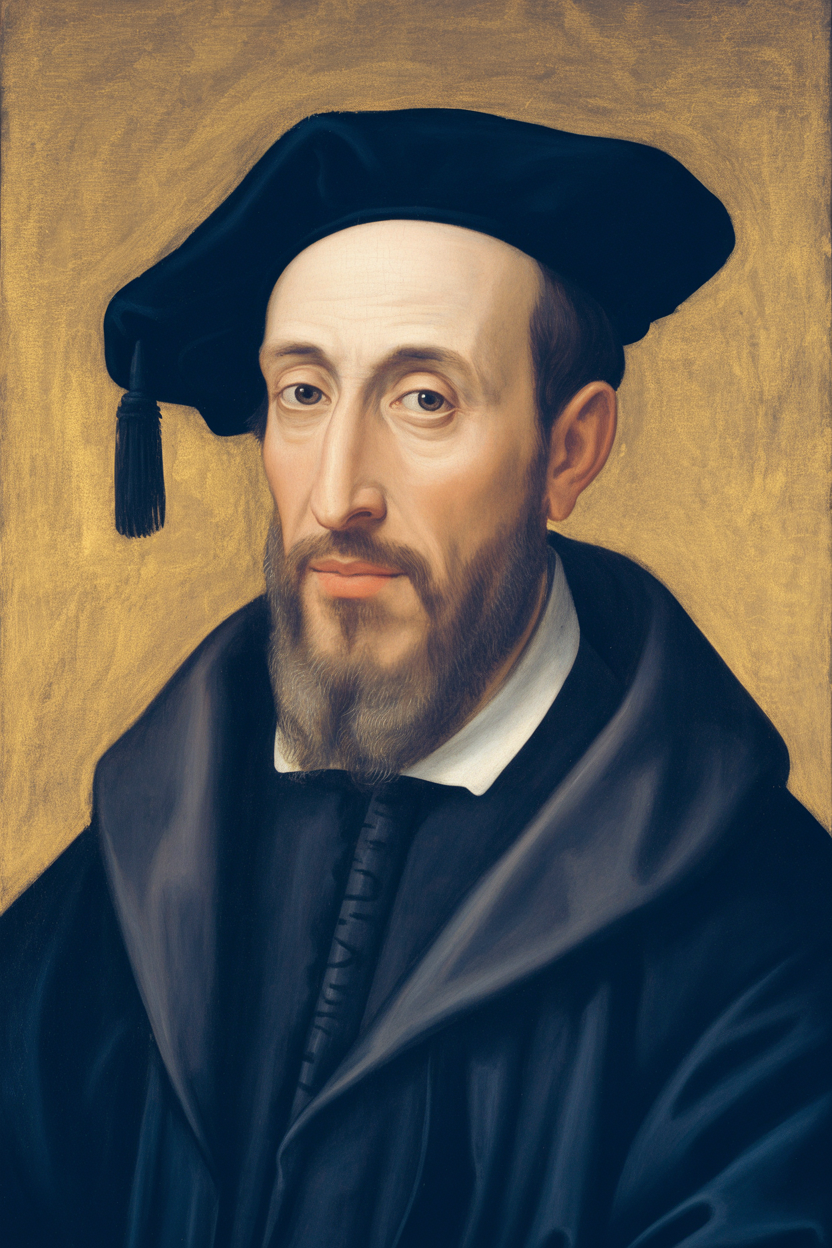
John Calvin
John Calvin was a French theologian, pastor, and reformer who led the Reformation in Geneva, Switzerland. His systematic theology, outlined in "Institutes of the Christian Religion," became the foundation for Reformed Christianity. Calvin was more rigorous than Luther in rejecting the Apocrypha.
Historical Context
Calvin responded directly to the Council of Trent (1545-1563), where the Catholic Church formally canonized the deuterocanonical books as Scripture. His "Antidote to the Council of Trent" (1547) systematically refuted Catholic positions, including on the canon. The Reformation had split Europe into warring religious factions, and adherents on both sides faced persecution and death.
Faith Under Attack
Persecution Faced
Calvin was forced to flee his native France in 1534 after King Francis I began persecuting Protestants following the "Affair of the Placards." He lived as a refugee, never able to return to his homeland. The French government burned Protestants at the stake, and Calvin's own writings were banned and burned.
⚔️ Suffering & Sacrifice
Though Calvin himself died of illness in 1564, his fellow French Protestants (Huguenots) suffered terribly. The St. Bartholomew's Day Massacre (1572), just 8 years after Calvin's death, saw 3,000-10,000 Huguenots slaughtered in Paris alone, with up to 70,000 killed across France. Calvin spent his life knowing his followers were being hunted and killed in his homeland.
Key Teachings
- 1The sovereignty of God in all things
- 2Predestination and election
- 3The Church cannot make Scripture—only recognize it
- 4Scripture interprets Scripture
Bible Texts Used in Protest
Ephesians 2:20
“And are built upon the foundation of the apostles and prophets, Jesus Christ himself being the chief corner stone.”
Explanation: Calvin argued the Church is built on the "prophets and apostles." Since the Apocrypha was written after the prophetic era ended (the "silent years"), it could not be part of the Church's foundation.
Luke 24:44
“And he said unto them, These are the words which I spake unto you, while I was yet with you, that all things must be fulfilled, which were written in the law of Moses, and in the prophets, and in the psalms, concerning me.”
Explanation: Jesus affirmed the three-part Hebrew canon (Law, Prophets, Psalms/Writings). This tripartite division does not include the Apocrypha. If Jesus did not recognize these books, Calvin argued, neither should we.
Galatians 1:8
“But though we, or an angel from heaven, preach any other gospel unto you than that which we have preached unto you, let him be accursed.”
Explanation: Calvin saw the Apocrypha as introducing "another gospel" of works-righteousness. Any teaching contradicting the apostolic gospel must be rejected.
Apocryphal Teachings Contested
Sirach 3:30
“As water extinguishes a blazing fire, so almsgiving atones for sin.”
Issue: Presents almsgiving as atonement, undermining Christ's unique atoning work.
2 Maccabees 12:46
“Whereupon he made a reconciliation for the dead, that they might be delivered from sin.”
Issue: Implies sins can be forgiven after death, contradicting Hebrews 9:27.
Legacy
Calvin's systematic rejection of the Apocrypha shaped Reformed and Presbyterian churches worldwide. The Westminster Confession of Faith (1646) codified his position, declaring these books "no part of the Canon of the Scripture."
Study this topic in depth →
Continue Your Study with Logos
Access the Logos Factbook for comprehensive research on the Apocrypha, including manuscripts, historical context, and scholarly analysis.