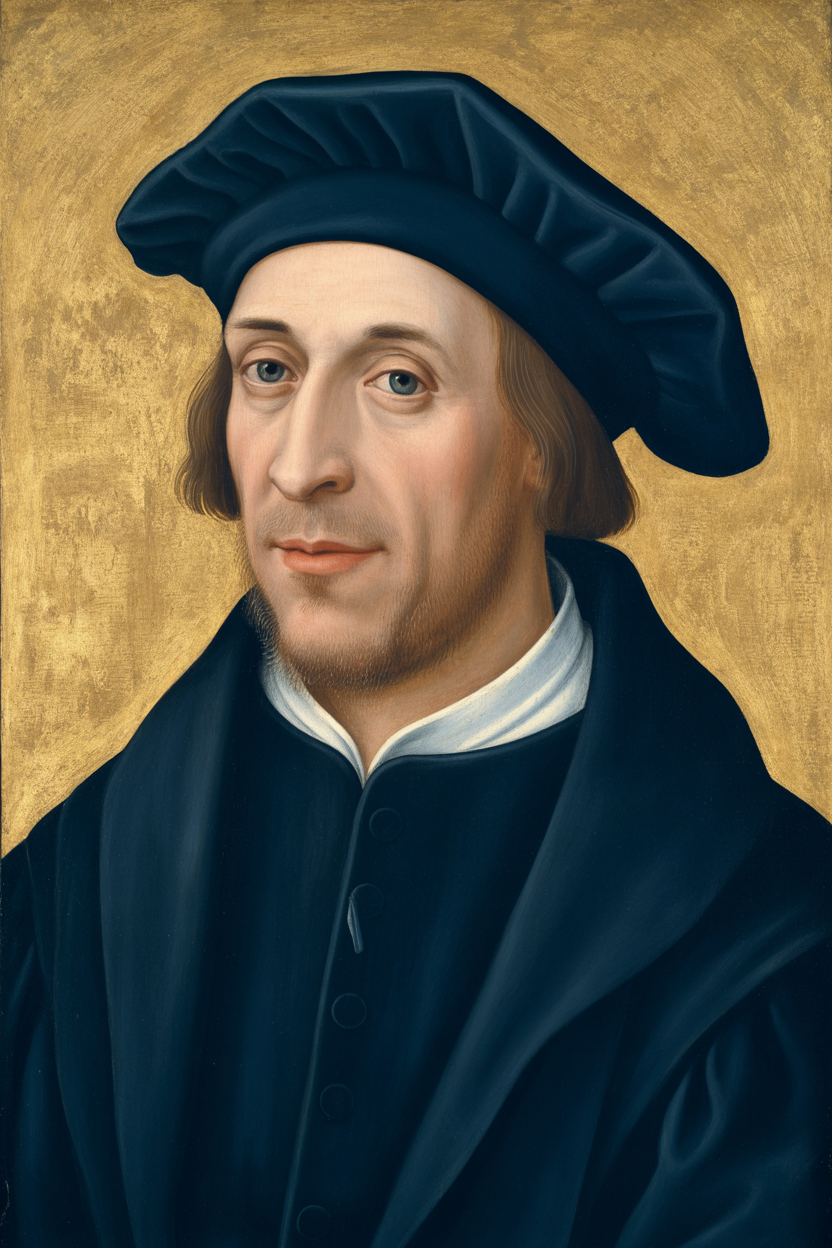
Huldrych Zwingli
Huldrych Zwingli was a Swiss priest and humanist scholar who led the Reformation in Zurich. Trained in the Renaissance tradition of returning to original sources (ad fontes), he emphasized the importance of pure, unadulterated Scripture.
Historical Context
Zwingli was killed in battle in 1531, the same year the Zurich Bible was published. His preface to this Bible articulated the Swiss Reformed position on the Apocrypha, acknowledging their value while denying their authority. The Swiss Reformation led to civil war between Protestant and Catholic cantons.
Faith Under Attack⚔️ MARTYRED
Persecution Faced
Zwingli faced fierce opposition from Catholic cantons in Switzerland. The Catholic cantons formed alliances against Zurich and threatened military action. Zwingli was excommunicated and his reforms were condemned by Catholic authorities. The religious divide in Switzerland led to armed conflict.
💀 Death for Faith
⚔️ MARTYRED: Zwingli was KILLED IN BATTLE on October 11, 1531, at the Battle of Kappel. He served as a chaplain with Zurich's army when Catholic forces attacked. Found wounded on the battlefield, he was offered a priest for last rites. When he refused, Catholic soldiers killed him. His body was quartered, burned, and his ashes mixed with dung. He died defending the Protestant faith with his life.
Key Teachings
- 1Only God's words have life-giving power
- 2Human traditions cannot bind the conscience
- 3Return to original sources (ad fontes)
- 4Scripture must be clear and self-interpreting
Bible Texts Used in Protest
John 6:63
“It is the spirit that quickeneth; the flesh profiteth nothing: the words that I speak unto you, they are spirit, and they are life.”
Explanation: Zwingli emphasized that only God's words have life-giving power. Human additions like the Apocrypha, being uninspired, cannot claim this spiritual vitality.
Romans 3:4
“God forbid: yea, let God be true, but every man a liar.”
Explanation: Zwingli used this to argue that "man is a liar and only God is the truth." Uninspired human writings cannot be placed alongside God's pure Word.
Isaiah 8:20
“To the law and to the testimony: if they speak not according to this word, it is because there is no light in them.”
Explanation: All teachings must be tested by the Law and the Prophets. Writings that contradict canonical Scripture have "no light in them."
Apocryphal Teachings Contested
Tobit 6:5-7
“Take the fish... if a devil or an evil spirit trouble any, we must make a smoke thereof before the man or the woman, and the party shall be no more vexed.”
Issue: Instructions resembling magical incantations, forbidden in Deuteronomy 18:10-12.
Legacy
Zwingli's humanist approach—returning to original Hebrew and Greek texts—became foundational for Reformed biblical scholarship. His insistence on the purity of Scripture influenced centuries of Swiss and Reformed Christianity.
Study this topic in depth →
Continue Your Study with Logos
Access the Logos Factbook for comprehensive research on the Apocrypha, including manuscripts, historical context, and scholarly analysis.