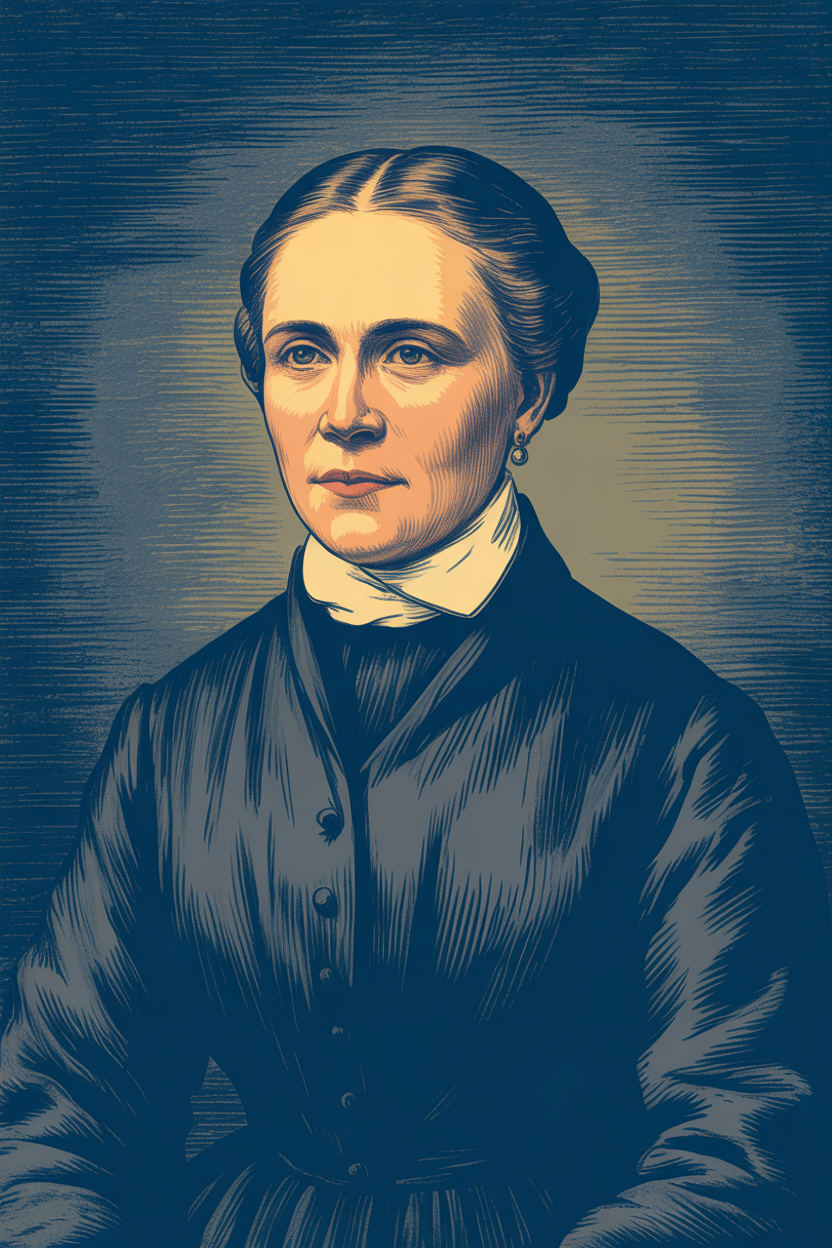
Ellen G. White
Ellen Gould White (née Harmon) was a co-founder of the Seventh-day Adventist Church and one of the most prolific female religious authors in American history. She claimed to receive prophetic visions throughout her 70-year ministry, writing over 100,000 pages on theology, health, and education.
Historical Context
White emerged from the Millerite movement, which expected Christ's return in 1844. After the "Great Disappointment," she helped establish Adventism. Her 1850 statement about the Apocrypha reflects early Adventist interest in these texts, though the church later adopted a more Protestant view.
Faith Under Attack
Persecution Faced
Ellen White faced intense public ridicule, accusations of fraud, and constant attacks from critics who questioned her prophetic claims. Newspapers mocked her visions, doctors tried to have her committed to asylums, and former associates published books attacking her character. She was labeled a "false prophet" and her followers were ostracized.
⚔️ Suffering & Sacrifice
At age 9, Ellen was struck in the face with a stone, causing a severe head injury that left her in a coma for three weeks and affected her health for life. Throughout her ministry, she endured chronic illness, public slander, and the death of four children. She and her husband James lived in poverty for years, sometimes lacking food and adequate shelter while traveling to share their message.
Key Teachings
- 1The Sabbath as God's seal
- 2The investigative judgment
- 3Health reform as part of the gospel
- 4The Bible as "the standard Book" above all others
Bible Texts Used in Protest
1 Thessalonians 5:20-21
“Despise not prophesyings. Prove all things; hold fast that which is good.”
Explanation: White believed prophecy continued beyond the biblical era. She encouraged testing all things—including the Apocrypha—against Scripture, taking what is good.
2 Timothy 3:16-17
“All Scripture is given by inspiration of God, and is profitable for doctrine, for reproof, for correction, for instruction in righteousness: That the man of God may be perfect, throughly furnished unto all good works.”
Explanation: While acknowledging value in the Apocrypha, White consistently pointed to the canonical Bible as the complete standard for faith and practice.
Isaiah 8:20
“To the law and to the testimony: if they speak not according to this word, it is because there is no light in them.”
Explanation: White used this as her standard for evaluating all religious writings, including her own. Anything contradicting Scripture must be rejected.
Apocryphal Teachings Contested
2 Esdras 7:105
“The day of judgment shall be the end of this time, and the beginning of the immortality to come.”
Issue: While not contradicting Scripture, White used such passages as supplementary insights while maintaining the Bible's supremacy.
Legacy
In 1850, White called the Apocrypha "the hidden book" that "the wise of these last days should understand." However, in 1911 she clarified that her visions confirmed "the Bible, and the Bible only" as the standard. The SDA Church today does not include the Apocrypha in its canon.
Study this topic in depth →
Continue Your Study with Logos
Access the Logos Factbook for comprehensive research on the Apocrypha, including manuscripts, historical context, and scholarly analysis.