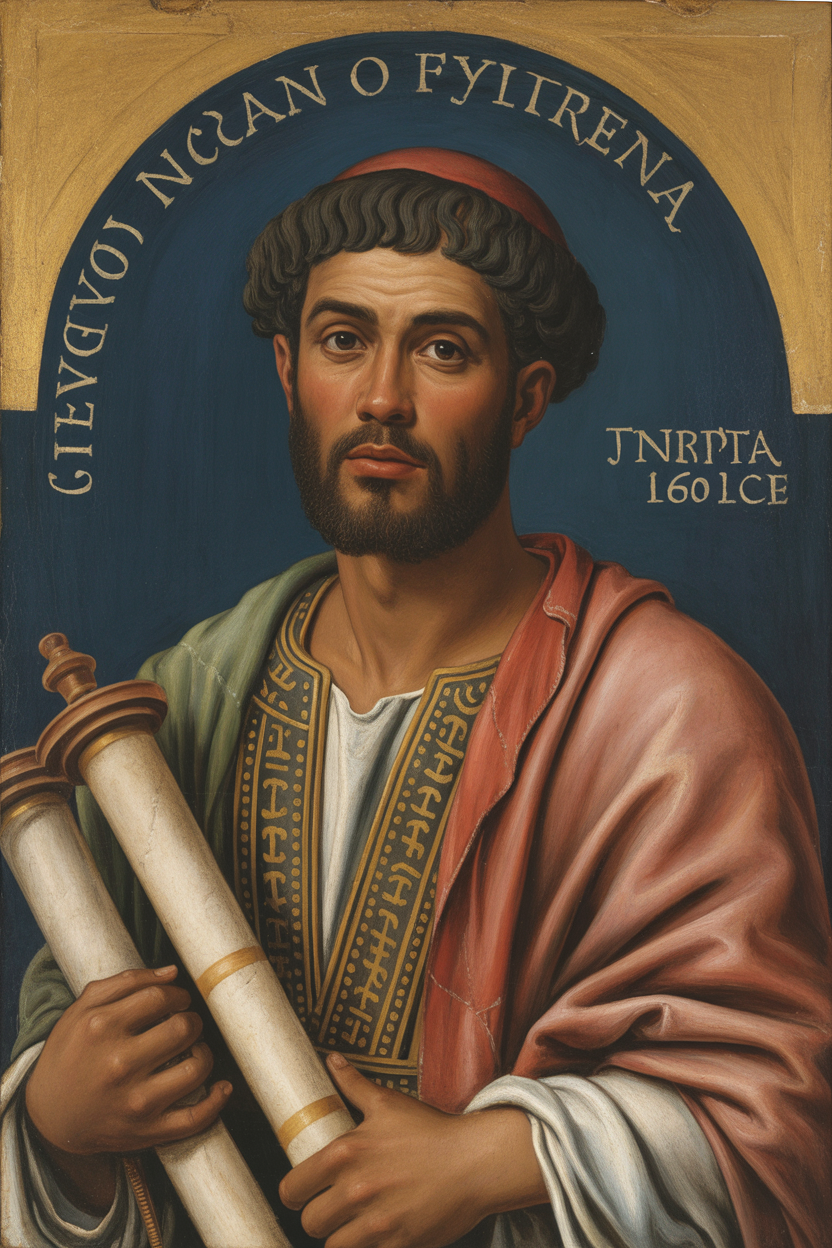
Jason of Cyrene
Jason of Cyrene was a Hellenistic Jewish historian from Cyrene in North Africa (modern Libya). He wrote a five-volume history of the Maccabean revolt, which was later condensed into what we now call 2 Maccabees. Only this abridged version survives.
Historical Context
Cyrene had a significant Jewish population in the ancient world. As a Diaspora Jew, Jason brought a Hellenistic perspective to Jewish history. His original work was condensed by an anonymous epitomist (summarizer) around 124 BCE.
Faith Under Attack
Persecution Faced
Jason wrote about the most brutal persecution in Jewish history before the Holocaust. The Seleucid king Antiochus IV Epiphanes outlawed Judaism itself—circumcision, Sabbath observance, and Torah study were punishable by death. The Temple was desecrated with pig sacrifices to Zeus.
⚔️ Suffering & Sacrifice
Jason documented the MARTYRDOM of faithful Jews, including the famous story of the mother and her seven sons (2 Maccabees 7), who were tortured and killed one by one for refusing to eat pork. He recorded how Jewish women were thrown from walls with their circumcised babies tied around their necks. Thousands died for their faith. Jason himself lived in the aftermath of this genocide, preserving the memory of those who chose death over apostasy.
Key Teachings
- 1God actively intervenes in history
- 2Martyrdom sanctifies God's name
- 3The dead can benefit from prayers and offerings
- 4The Temple is central to Jewish identity
Bible Texts Referenced
Daniel 12:2
“And many of them that sleep in the dust of the earth shall awake, some to everlasting life, and some to shame and everlasting contempt.”
Explanation: Jason's belief in resurrection of the dead (2 Maccabees 7) reflects Daniel's teaching. The Maccabean martyrs died believing God would raise them.
Deuteronomy 32:35
“To me belongeth vengeance, and recompence; their foot shall slide in due time: for the day of their calamity is at hand.”
Explanation: The Maccabean stories emphasize God's vengeance on persecutors, echoing this Deuteronomic theme.
Protestant Concerns
2 Maccabees 12:44-45
“For if he had not hoped that they that were slain should have risen again, it had been superfluous and vain to pray for the dead.”
Issue: This passage became the primary biblical support for Purgatory and prayers for the dead—doctrines rejected by all Protestant Reformers.
2 Maccabees 15:14
“This is a lover of the brethren, who prayeth much for the people, and for the holy city, to wit, Jeremias the prophet of God.”
Issue: Describes the dead prophet Jeremiah praying for the living—supporting the intercession of saints, rejected by Protestants.
Legacy
Despite Protestant rejection, 2 Maccabees provides invaluable historical information about the Maccabean revolt, Jewish martyrdom, and the origins of Hanukkah. Its theology of resurrection and afterlife shows development in Jewish thought before Christianity.
Study this topic in depth →
Continue Your Study with Logos
Access the Logos Factbook for comprehensive research on the Apocrypha, including manuscripts, historical context, and scholarly analysis.