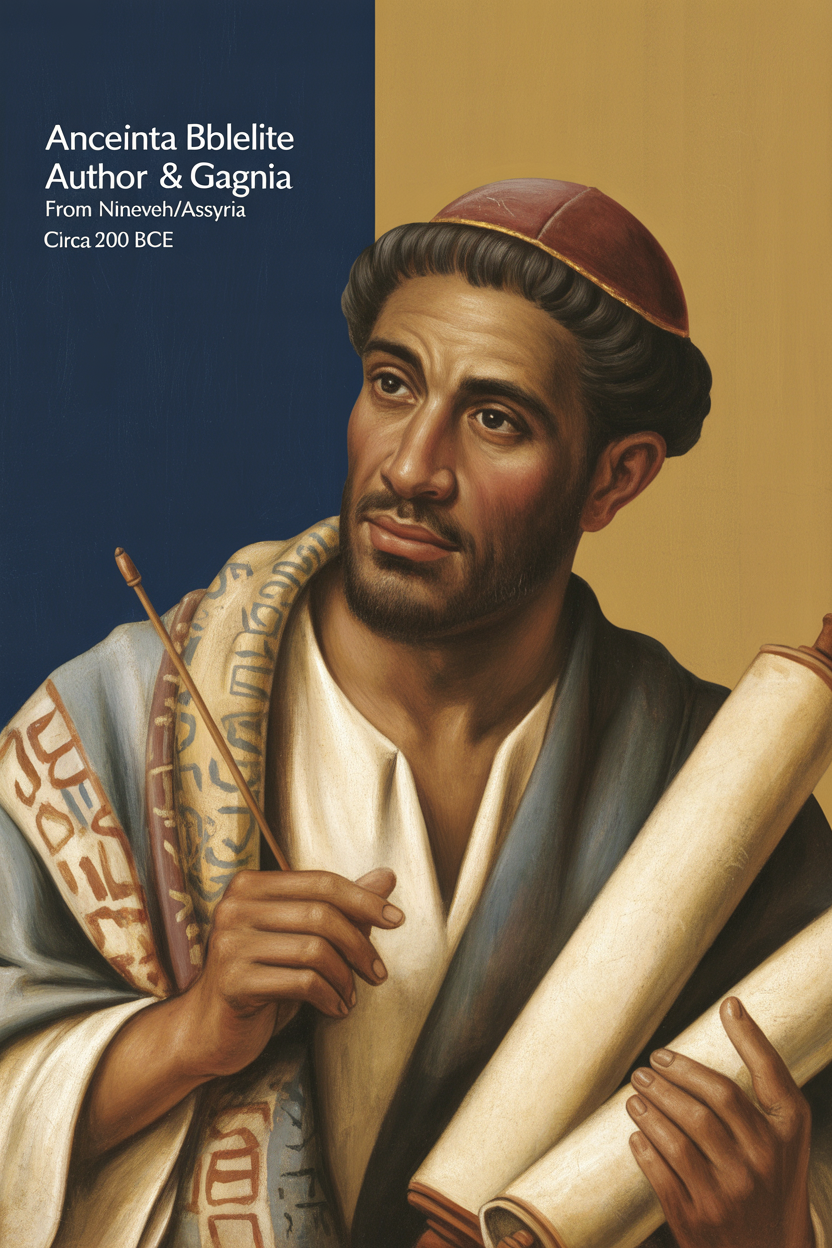
Author of Tobit
The author of Tobit is anonymous. The story is set among Israelite exiles in Assyria after the fall of the Northern Kingdom (722 BCE), but scholars believe it was composed around 200 BCE. It is a beloved tale of faith, family, and divine providence.
Historical Context
Tobit was likely written during the Hellenistic period, when Jews faced pressure to assimilate into Greek culture. The story emphasizes traditional Jewish values: prayer, fasting, almsgiving, endogamy (marrying within the faith), and burial of the dead.
Faith Under Attack🛡️ RISKED LIFE
Persecution Faced
The story of Tobit depicts a faithful Jew living under Assyrian oppression. Tobit risked his life to bury executed Jews—an act forbidden by the Assyrian king. The narrative reflects the experience of Jews living as persecuted minorities in hostile empires.
⚔️ Suffering & Sacrifice
In the story, Tobit is blinded and impoverished for his faithfulness. He buries the bodies of executed Jews at night, knowing discovery means death. King Sennacherib actively sought to kill him, forcing him to flee and lose all his property. The author wrote during a time when Jews again faced pressure to abandon their faith—the story encouraged perseverance even when faithfulness brings suffering.
Key Teachings
- 1Almsgiving delivers from death
- 2Prayer and fasting are powerful
- 3Angels serve as God's messengers
- 4Family loyalty and endogamy are essential
Bible Texts Referenced
Genesis 24:3-4
“And I will make thee swear by the LORD... that thou shalt not take a wife unto my son of the daughters of the Canaanites... but thou shalt go unto my country, and to my kindred, and take a wife unto my son Isaac.”
Explanation: Tobit's emphasis on endogamy (marrying within the faith) echoes Abraham's concern for Isaac. Both stress maintaining covenant identity through marriage.
Proverbs 19:17
“He that hath pity upon the poor lendeth unto the LORD; and that which he hath given will he pay him again.”
Explanation: Tobit's teaching on almsgiving extends Proverbs' connection between generosity and divine reward.
Protestant Concerns
Tobit 12:9
“For alms doth deliver from death, and shall purge away all sin.”
Issue: Protestants argue this teaches salvation by works, contradicting Ephesians 2:8-9 ("by grace...through faith...not of works").
Tobit 6:5-7
“If a devil or an evil spirit trouble any, we must make a smoke thereof before the man or the woman, and the party shall be no more vexed.”
Issue: Instructions for using fish organs to drive away demons resemble magical incantations forbidden in Deuteronomy 18:10-12.
Legacy
Despite Protestant concerns, Tobit remains a beautiful story of faith and family. Its portrayal of the angel Raphael influenced Christian angelology, and its emphasis on prayer, fasting, and charity shaped Jewish and Catholic piety.
Study this topic in depth →
Continue Your Study with Logos
Access the Logos Factbook for comprehensive research on the Apocrypha, including manuscripts, historical context, and scholarly analysis.