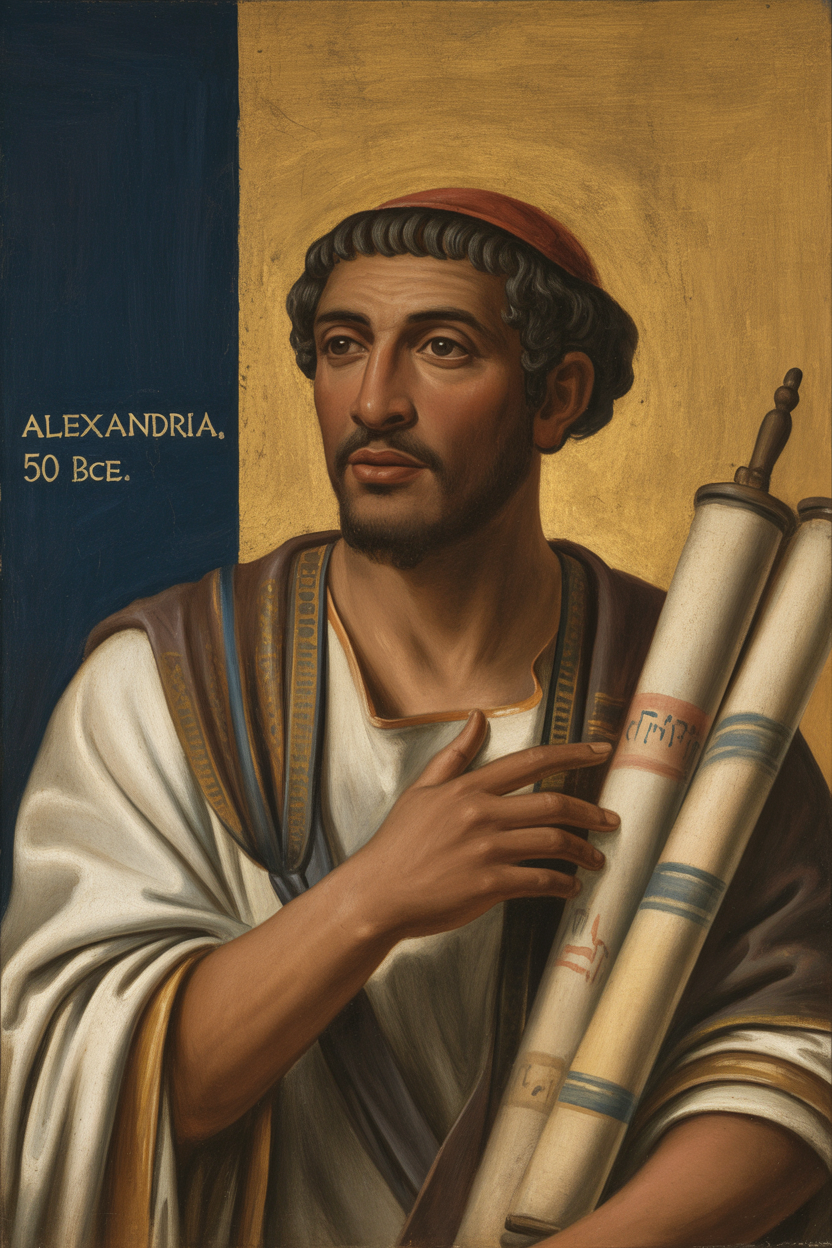
Author of Wisdom of Solomon
The author of Wisdom of Solomon is anonymous, though the book is written in Solomon's voice. Scholars believe it was composed by an Alexandrian Jew, probably in the 1st century BCE. The author was deeply educated in both Jewish Scripture and Greek philosophy.
Historical Context
Alexandria, Egypt was home to the largest Jewish community outside Palestine. These Jews spoke Greek and engaged with Hellenistic philosophy. The Wisdom of Solomon shows a sophisticated blending of Jewish theology with Platonic and Stoic ideas.
Faith Under Attack
Persecution Faced
Alexandrian Jews faced periodic persecution and anti-Jewish riots. The book itself speaks of the "righteous" being persecuted by the "ungodly" (Wisdom 2). The author wrote to encourage Jews facing hostility from their pagan neighbors and pressure to abandon their faith.
⚔️ Suffering & Sacrifice
The author describes the persecution of the righteous in vivid terms: "Let us lie in wait for the righteous man...let us condemn him to a shameful death" (Wisdom 2:12, 20). Alexandrian Jews experienced violent pogroms, especially in 38 CE when mobs attacked Jewish neighborhoods, synagogues were burned, and Jews were tortured in theaters. The author wrote to sustain faith in a God who rewards the righteous even when they suffer and die.
Key Teachings
- 1Wisdom is a divine emanation
- 2The soul is immortal
- 3Idolatry is the root of all evil
- 4God's wisdom guided Israel through history
Bible Texts Referenced
Proverbs 8:22-31
“The LORD possessed me in the beginning of his way, before his works of old...”
Explanation: The Wisdom of Solomon personifies Wisdom more extensively than Proverbs, describing her as present at creation and guiding all of history.
Genesis 1:27
“So God created man in his own image, in the image of God created he him.”
Explanation: Wisdom 2:23 expands on this, saying "God created man for incorruption, and made him in the image of his own eternity."
Protestant Concerns
Wisdom 8:19-20
“As a child I was by nature well endowed, and a good soul fell to my lot; or rather, being good, I entered an undefiled body.”
Issue: This suggests the pre-existence of the soul, a Platonic idea not found in canonical Scripture. Some see it as contradicting the biblical view that body and soul are created together.
Legacy
The Wisdom of Solomon significantly influenced early Christian theology. Its language about Wisdom as God's image and agent of creation parallels John 1's description of the Logos. Despite Protestant rejection, it shaped Christian understanding of Christ as divine Wisdom.
Study this topic in depth →
Continue Your Study with Logos
Access the Logos Factbook for comprehensive research on the Apocrypha, including manuscripts, historical context, and scholarly analysis.